
If you have been feeling overwhelmed by the amount of news stories and social media posts related to unrest, uncertainty, and general chaos, you are not alone! Even if you don't regularly watch the news or follow social media, chances are you've heard stories from friends, coworkers, or customers that have shared their feelings about recent events or may have experienced a distressful situation themselves.
It is part of our human experience to be concerned and want to help one another, but it can be very upsetting when you feel helpless or unable to change a situation. Those feelings can also lead to increased worry, anxiety, and stress. Understanding what you can and cannot control can help you focus on the things that you have control over (i.e. your thoughts, actions, and choices) and those you do not have control over (i.e. other people's behavior, the weather, and the economy).
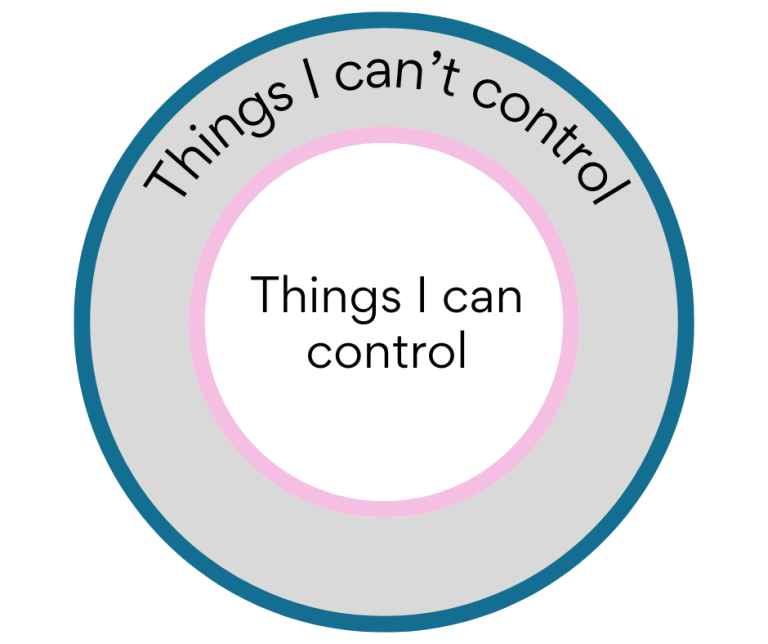
The Circle of Control is a simple way to separate what you can control from what you can't, and helps you focus on those things that are within your control. The idea was first developed by ancient Greek and Roman philosophers, who taught that inner peace comes from accepting what is beyond our control, while taking full responsibility for our thoughts and actions. In modern psychology, this concept is used in cognitive behavioral therapy, self-development programs, and personal coaching. Stephen Covey also expanded on this idea in his book, The 7 Habits of Highly Effective People, by introducing the ideas of Circle of Influence and Circle of Concern.
There are a number of benefits from learning to prioritize what you can control including: reduced feelings of anxiety and overwhelm, improved decision-making, increased productivity, greater confidence and capability, and a proactive mindset that can lead to long-term success and personal fulfillment.
Using the Circle of Control method involves first identifying your worries, then sorting them into two categories: what you can control and what you can't. Once you have identified what is within your control, you can create an action plan and start taking steps to address your worries. For the things that are beyond your control, you need to work on shifting your focus and letting go of your worries. In a way, letting go is also taking action - something that is under your control.
If you would like a handy Circle of Control worksheet to help you in the process, you can download and print one here.
By practicing this method, you can learn habits that will allow you put your energy into more productive actions, as well as make life easier and more enjoyable for you and those around you.